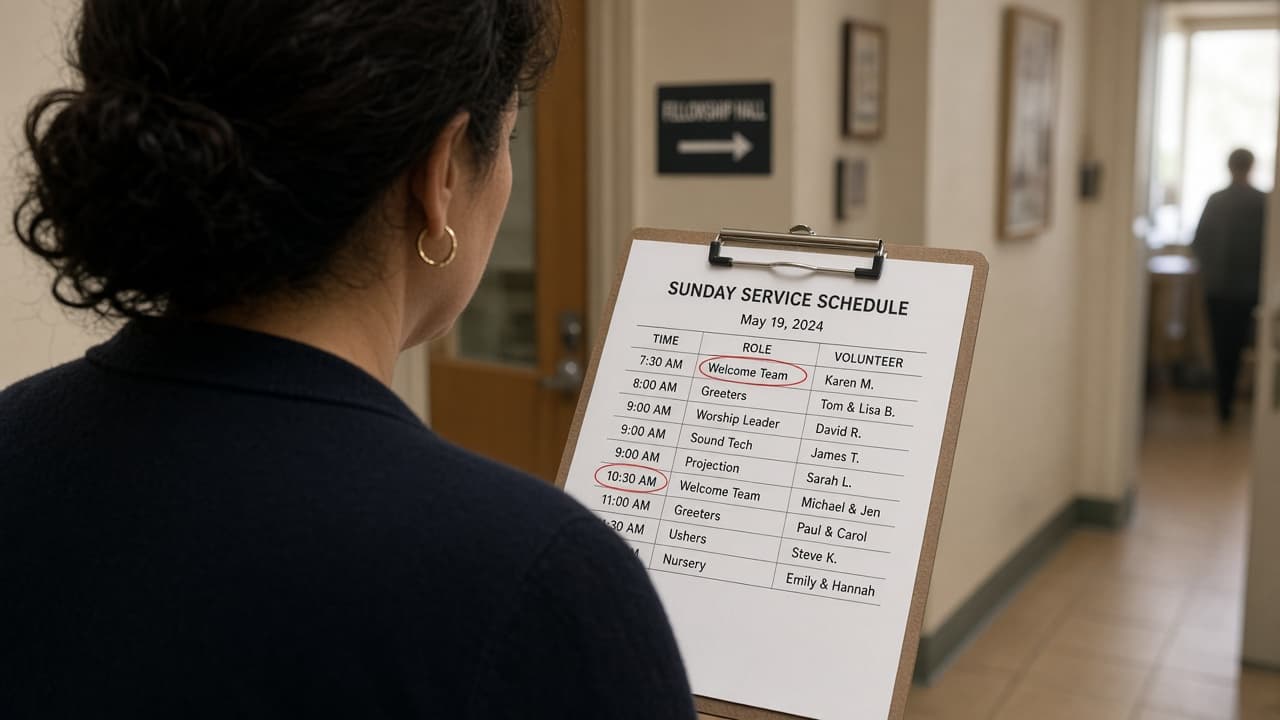
Every coordinator knows the feeling. It's 8:45 on a Sunday morning and the person scheduled for the nursery hasn't shown up and isn't answering their phone. You spend the next fifteen minutes solving a problem that shouldn't exist. No-shows are one of the most draining parts of running a volunteer team — and most of them are preventable.
The actual reasons volunteers don't show up
The most common reason a volunteer doesn't show up isn't that they forgot or don't care. It's that the expectation was never clear. They were added to a schedule they never confirmed. They received a reminder so generic it didn't feel urgent. Or they said yes to a request three weeks ago and the details got lost somewhere between the conversation and Sunday morning.
A smaller portion are genuine forgetting — life intervenes, Sundays stack up, the schedule slipped off their radar. And a small number are people who overcommitted and quietly stopped showing up rather than saying they needed a break. Each of these has a different fix, which is why treating all no-shows the same way doesn't work.
The confirmation step most churches skip
Adding someone to a schedule is not the same as getting their confirmation. The difference is a reply — a 'yes, I'll be there' that closes the loop. Without it, you have a name in a slot, not a committed volunteer. The practical scheduling guide covers how to build the two-week timeline that makes confirmation work.
Confirmation doesn't need to be complicated. A text with a yes/no reply option, sent 48 to 72 hours before the service, gets most people to respond. The ones who don't respond to that first message are your early warning system — follow up personally before Sunday, not the morning of. What makes a reminder actually work is covered in church volunteer communication best practices.
What a reminder that actually works looks like
A reminder that says 'Don't forget you're serving this Sunday!' does almost nothing. A reminder that says 'Hi Marcus — you're scheduled for Kids Ministry at 9 AM this Sunday at Grace Church. Reply YES to confirm or NO if something has come up' does a lot more.
Specificity is what makes a reminder actionable. Name, role, time, location, and a clear response option. When a volunteer can confirm with one tap, most of them will. When they have to figure out what you're asking, many won't bother.
Building a sub bench before you need it
No system eliminates all no-shows. The coordinator who never panics on Sunday morning isn't the one who never has a no-show — it's the one who has a bench. A list of three to five people per ministry area who are willing to fill in on short notice, contacted in order.
The bench only works if you maintain it. People on the bench need to know they're on the bench, know approximately how often they might get called, and feel like it's an honored role rather than a last resort. Treat your substitutes well and they'll show up when you need them.
When the pattern means something deeper is wrong
If the same volunteer repeatedly doesn't show up without notice, that's a different problem than a logistics gap. It usually means they're overcommitted, burned out, or serving in a role that doesn't fit them. The signs of volunteer burnout are specific and catchable early — here's what to watch for. The right move is a direct, private conversation — not a passive-aggressive scheduling change.
Ask what's going on. Most people will tell you. Many of them want permission to step back from a role that doesn't fit or a frequency that's too much. Giving them that permission is better for everyone than watching the pattern continue.
Frequently asked questions
What is the most common reason church volunteers don't show up on Sunday?
The most common cause is an unclear expectation — the volunteer was added to a schedule they never confirmed, received a generic reminder that didn't feel urgent, or said yes three weeks ago and the details got lost. A smaller portion is genuine forgetting, and a small number is quiet overcommitment. Each has a different fix.
What is the difference between adding someone to a schedule and getting their confirmation?
A name in a slot is not a committed volunteer — confirmation is a reply that closes the loop. A text with a yes/no reply option sent 48 to 72 hours before service gets most people to respond. Volunteers who don't reply to that message are an early warning system: follow up personally before Sunday, not Sunday morning.
What should a volunteer reminder text say to actually reduce no-shows?
'Don't forget you're serving this Sunday' does almost nothing. A reminder that includes the volunteer's name, their role, the time, the location, and a clear response option does a lot more. Specificity is what makes a reminder actionable — when a volunteer can confirm with one tap, most of them will.
How do you build a volunteer substitute bench for Sunday morning coverage?
Maintain a list of three to five people per ministry area who are willing to fill in on short notice, contacted in a set order. The bench only works if people know they're on it, understand approximately how often they might get called, and feel it's an honored role — not a fallback position.
How do you address repeated no-shows without damaging the relationship?
Two no-shows in a month is a pattern — reach out after the first one, not after they've stopped coming entirely. The post recommends closing the loop in person rather than in a group chat. It's almost always a schedule conflict, exhaustion, or a miscommunication that's fixable with a direct conversation.